Endocrinology Top Doctors
Congratulations to our 2024 Top Doctors

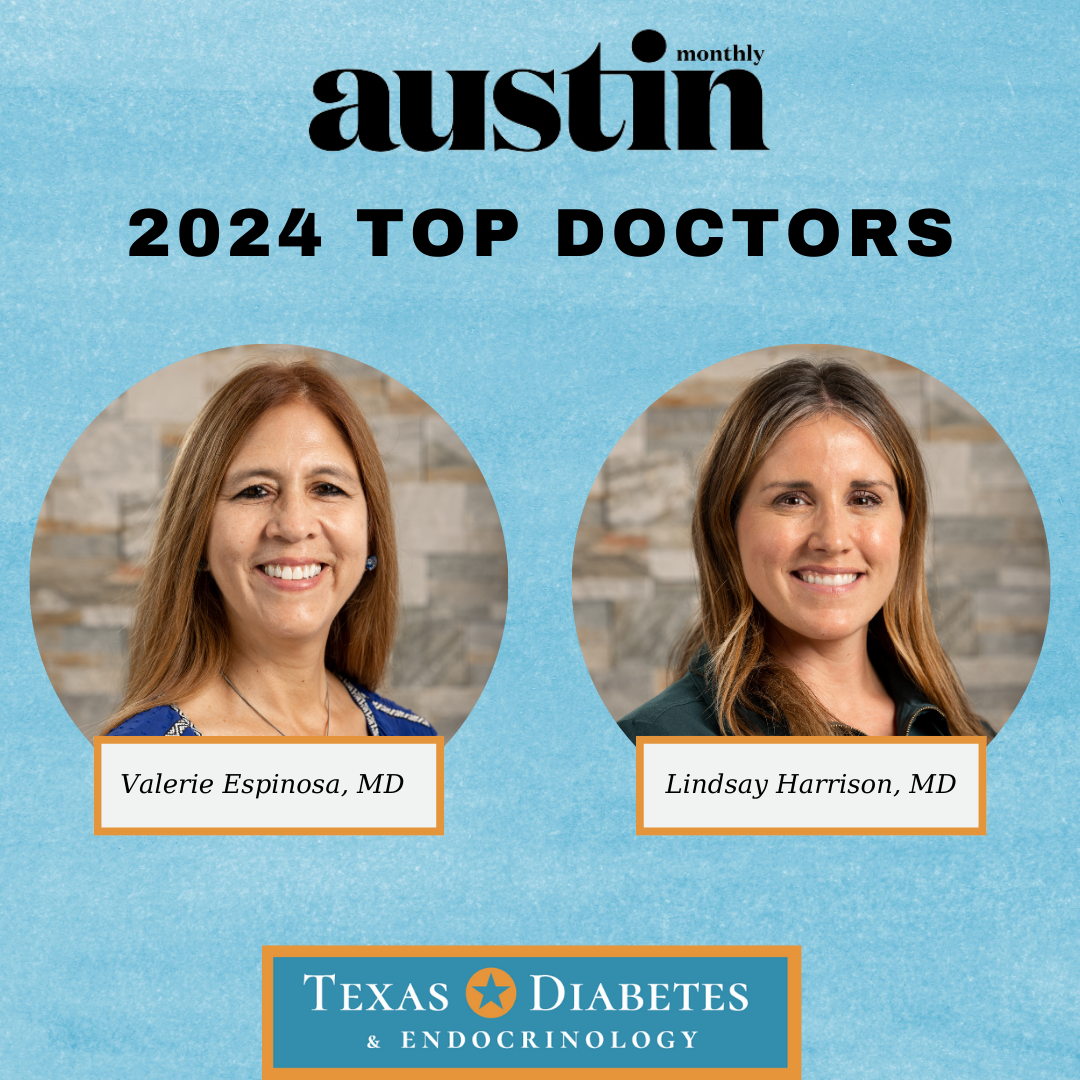
We welcomed the new year celebrating board certified endocrinologists Valerie Espinosa, MD and Lindsay Harrison, MD for being recognized on the 2024 Top Doctors list in Austin Monthly magazine. 

Dr. Espinosa joined Texas Diabetes and Endocrinology in 2005. She is board certified in endocrinology and metabolism and active in clinical research concerning diabetes, obesity and thyroid disease. 

Dr. Harrison joined Texas Diabetes and Endocrinology in 2013. She is board certified in internal medicine, endocrinology, diabetes and metabolism. 

Austin Monthly Top Doctors is an annual peer-nominated recognition of the best physicians in Travis, Williamson and Hays counties. Using an online survey, physicians are asked to nominate colleagues who they would trust with the medical care of themselves or their family. We are could not be prouder to have our physicians included on this list.  

Congratulations Dr. Espinosa and Dr. Harrison!

For more information on our comprehensive endocrinology services, schedule a consultation with one of our board certified endocrinologists by requesting an appointment online or call (512) 458-8400. 

Don’t forget to follow us on Facebook and Instagram and check back with us each month as we provide you with helpful health and wellness information.

heart disease prevention
Heart Disease and the T2D Connection

People with diabetes are twice as likely to have heart disease or suffer a stroke than non-diabetics. 

In fact, the American Heart Association recently issued its  Heart Disease and Stroke Statistics for 2023 which found that one in three adults in the U.S. have three or more risk factors that contribute to cardiovascular disease, metabolic disorders, and/or kidney disease. This supports the likelihood that if you have diabetes, you may also be prone to heart disease. 

How does diabetes contribute to heart disease?

High blood sugar levels can damage the blood vessels and nerves surrounding the heart, leading to deterioration and serious damage over time. 

Texas Diabetes team of endocrinology specialists can not only help manage your diabetes, but we can monitor your heart health and assess your risk for cardiovascular disease too. 

Our endocrinology experts recommend several tips to both manage your diabetes and support a healthy heart.  

Five Tips to Manage Diabetes While Supporting Heart Health 

1.         Maintain a healthy weight. Discuss your goal weight with your physician for optimal health and remember that steady and gradual weight loss is the safest route. 

2.         Exercise regularly. Regular exercise, at least 150 minutes per week for adults, helps boost circulation and lower blood glucose levels. Find a sport or active hobby that you enjoy so that you’re more likely to stick with it!

3.         Follow a heart healthy diet. Eat right-sized portions and try using the Diabetes Plate Method to guide your meals. Load up on brightly colored, non-starchy vegetables, lean proteins, and whole grains. 

4.         Look after your mental health. Effectively managing stress can help keep hormones and blood pressure in check, both of which lead to better diabetes management and heart health. Find things that help you to unwind, like walks, reading, meditation, or warm baths, and build them into your daily schedule as you would any other important activity. 

5.         Take medications as prescribed. Make sure you are taking all of your diabetes medications and insulin as directed by your physician to support healthy blood pressure and cholesterol levels. And stay on top of all your numbers that you should be regularly monitoring, such as your A1C, blood glucose levels, and blood pressure. 

In addition to managing your diabetes, we can help assess your risk for cardiovascular disease so that we can best determine your treatment.  

Heart Disease Prevention at TD&E

At Texas Diabetes and Endocrinology, we conveniently offer cardiovascular risk assessment testing in our clinics which includes: 

  • Advanced Lipid Test: this diagnostic evaluates more than traditional testing (cholesterol, LDL & HDL) in order to measure abnormal lipid levels that are often missed 
  • Coronary Artery Calcium (CAC) Test: this is a non-invasive procedure similar to an X-ray that detects calcium/plaque in the arteries that feed your heart which can help diagnose coronary artery disease before showing signs or symptoms 

Our physicians and advanced practice providers are trained in lipidology and have extensive experience in treating cholesterol disorders. 

Contact Us Today to Learn about Managing Diabetes and Preventing Heart Disease 

If you’d like to schedule an appointment with Texas Diabetes and Endocrinology and discover how our diabetes treatment and heart prevention services can help you, contact us at (512) 458-8400 or request an appointment online.  

Don’t forget to follow us on Facebook and Instagram and check back with us each month as we provide you helpful wellness and health information.

Texas Diabetes Super Doctors
Texas Diabetes Endocrinologists Named to Texas Monthly Super Doctors 2023 List

It is an honor to recognize Texas Diabetes and Endocrinology physicians that have once again been included on the Super Doctors and Super Doctors Rising Stars list for 2023, published in Texas Monthly magazine. 

Each year, MSP Communications honors approximately 5 percent of physicians from across the state as Super Doctors based on evaluation of peer recognition and professional achievement. Super Doctors Rising Stars recognition is given to no more than 2.5 percent of physicians who exhibit exceptional promise in their field and have been practicing for ten years or less. 

Texas Diabete’s 2023 Super Doctors are: 

2023 Super Doctors Rising Stars are: 

At Texas Diabetes and Endocrinology, we take a personalized approach to patient care. Our board certified endocrinologists are experts in the diagnosis, treatment and management of all disorders of the endocrine system.

The services we offer at our locations in Round Rock, Central Austin and South Austin include:

For more information on our comprehensive endocrinology services, schedule a consultation with one of our board certified endocrinologists by requesting an appointment online or call (512) 458-8400. 

Don’t forget to follow us on Facebook and Instagram and check back with us each month as we provide you with helpful health and wellness information.

extreme thirst, polydipsia, anemia and diabetes
Dr. Srujana Yada for Health Central: How Anemia Can Cause Excess Thirst

There are numerous causes of unexplained increased thirst (polydipsia), including dehydration, anemia, dry mouth, and hypercalcemia. However, it is mostly commonly associated with diabetes. 

In a recent Health Central article, endocrinologist Dr. Srujana Yada explains that extreme thirst can be a result of severe anemia because when “blood pressure drops and blood volume decreases, one of the mechanisms our brain uses to maintain blood pressure is to increase water intake.” 

Dr. Yada advises people to drink two to three liters of fluid (about a gallon) a day, and  “if a person is drinking more than a gallon a day for several days and unable to quench thirst even after that, I would recommend seeing a doctor.”  

Read the article to learn about the causes of polydipsia and when to see a doctor.

For more information on our comprehensive endocrinology services, schedule a consultation with one of our board certified endocrinologists by requesting an appointment online or call (512) 458-8400. 

Don’t forget to follow us on Facebook and Instagram and check back with us each month as we provide you with helpful wellness and health information.

« Previous PageNext Page »